
All about Basic Patterns
Learn what basic patterns are, how bodice, sleeve, skirt, and pants patterns work together, and which measurements and tools you need to create your own basic pattern set.
What Are Basic Patterns?
Basic patterns are a set of sewing patterns that represent the basic shape of the human body in a specific size. They can be developed using standard sizes or custom individual measurements, when their proportions do not correspond to a single standard size, or when several garments will be make for the same person.
What Are Basic Patterns Used For?
Basic patterns are important because they can be used as the foundation for developing virtually any type of garment. This process is called pattern transformation, because we transform our basic patterns to create the design of the garment we want to make.
Pattern, Block, and Sloper
In pattern making, you may come across the terms pattern, block, and sloper. Although their use can vary depending on the pattern-making system or author, a basic block or sloper generally refers to a foundational pattern that represents the shape of the body and can be used as a starting point for developing different garment designs.
In this series, we will use the term basic pattern to refer to these foundational patterns.
The Main Basic Patterns
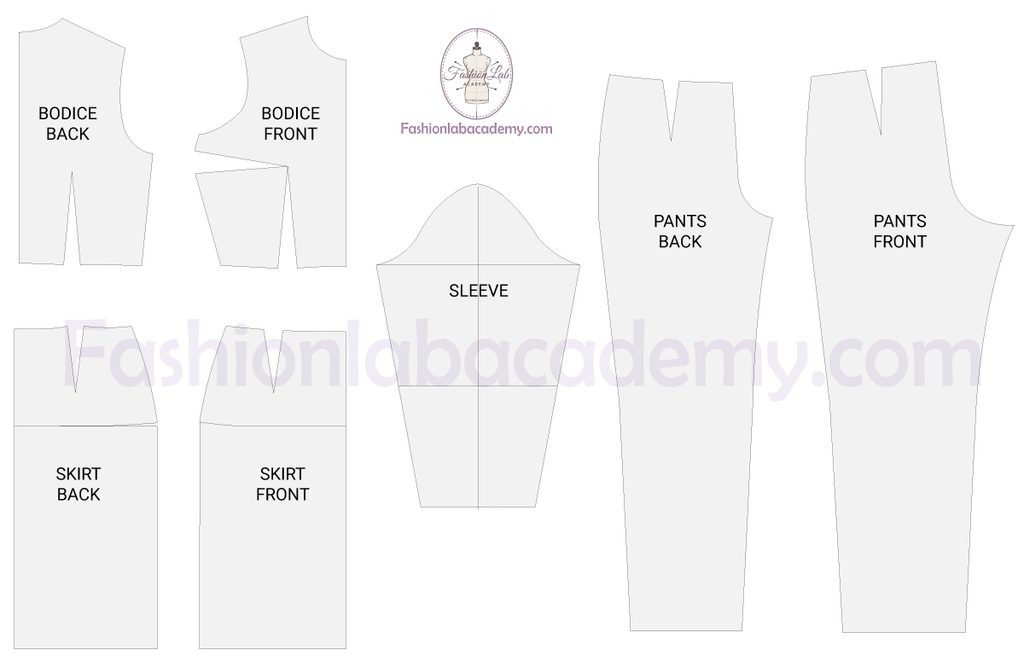
The basic pattern set we will be using consists of the following pieces:
Basic Bodice Pattern
It consists of a front and a back pattern. We can imagine these pieces as a fitted blouse with darts to shape the bust and waist, without sleeves. From this pattern, and through the necessary transformations, we can create different types of blouses and tops.
Basic Sleeve Pattern
This is a straight, long-sleeve pattern that fits the armhole of the basic bodice and can be transformed into different types of sleeves.
Basic Skirt Pattern
It consists of a front and a back pattern. Its basic shape is a straight skirt, usually knee length, with darts on both sides to fit the waist and hips.
Basic Pants Pattern
It consists of a front and a back pattern for straight-leg pants, with a regular leg width, regular rise, no waistband, and darts on both sides. In this series, the pattern is fitted to the natural waist for women’s garments and to the lower waist for men’s garments.
If we made garments using these basic patterns, we could imagine them as relatively close-fitting garments with only the ease necessary to allow movement.
Later, we can develop other sets of basic patterns to make it easier to work with specific garment styles. For example:
- Basic patterns without ease, for eveningwear or very close-fitting garments.
- Basic patterns with negative ease, for working with stretch fabrics.
- Basic patterns without darts, for loose-fitting garments.
- And others.
Materials and Tools Needed
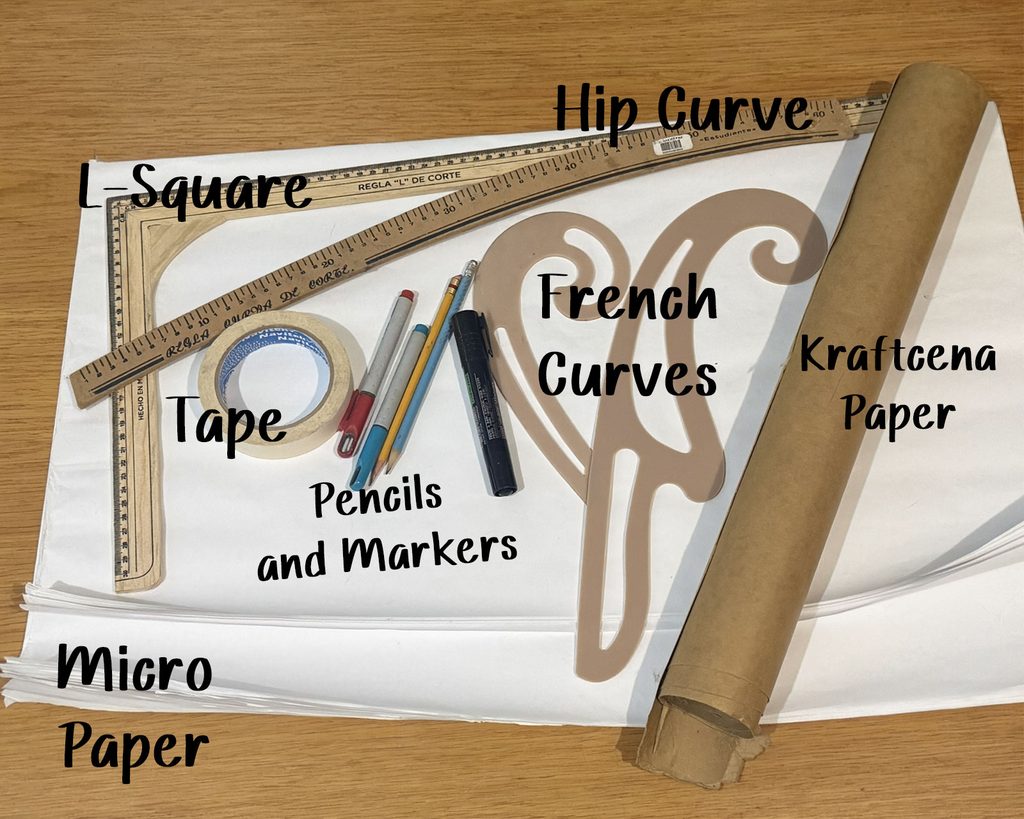
Ideally, basic patterns should be drafted on heavy or thick paper. Kraftcena paper has traditionally been used so that the patterns are durable and can later be transferred onto thinner paper. Micro paper is the most suitable for making pattern transformations.
Other materials and tools needed include:
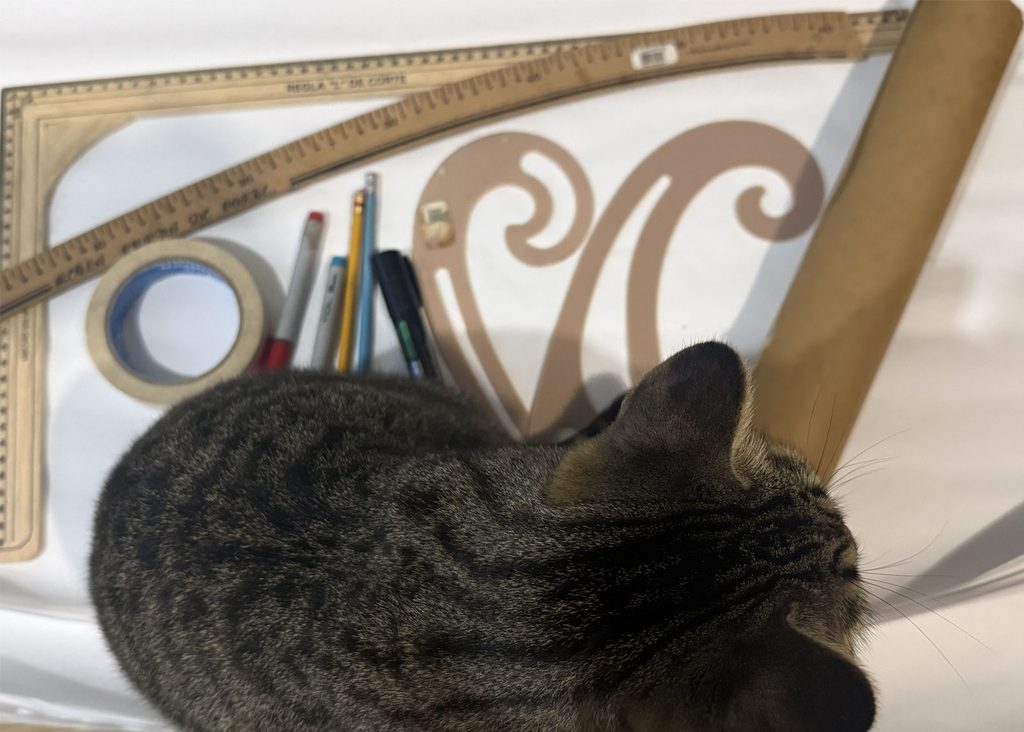
L-Square
Make sure it has a perfect 90° angle. It is used to draw the guideline lines that serve as the foundation for constructing our patterns.
French Curve
Used to draw necklines, armholes, and sleeve curves.
Hip Curve
Used to draw slightly curved lines, such as the side seams of skirts and pants.
Pencils and Markers
Used to draft the patterns and write the necessary labels and information on them.
Bloopers 😅
Measurements Needed for Basic Patterns
Basic patterns can be developed using standard sizes or individual measurements.
Standard Sizes
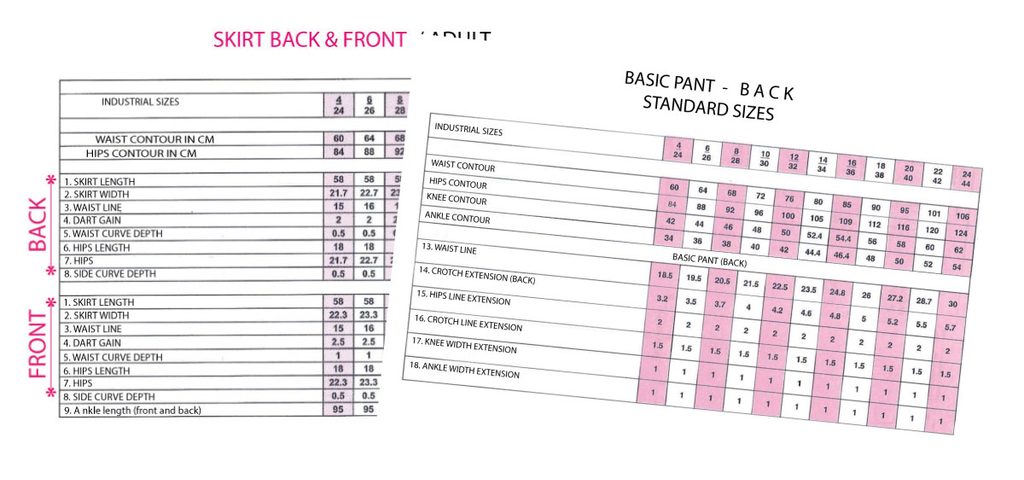
If we are working with standard sizes, we only need the basic circumference measurements:
- Bust circumference (chest circumference for men’s patterns)
- Waist circumference
- Hip circumference
Then, using the information provided by the pattern-making method we choose, we will identify the size that corresponds to our measurements in the size charts. These charts will provide the additional measurements we need to draft our patterns.
Individual Measurements
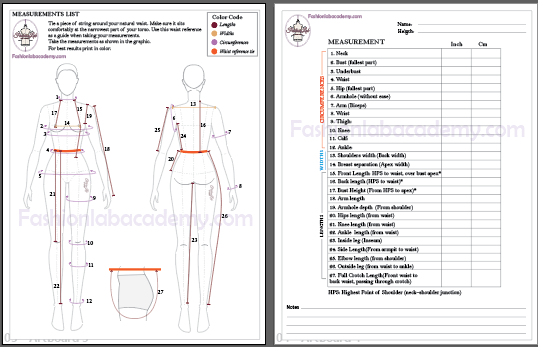
If we are working with individual measurements, we need to write the person’s complete set of measurements to ensure that the basic patterns fit their body correctly.
These measurements include both basic measurements and additional measurements needed to apply them to our patterns.
Upcoming Classes
In the upcoming classes, I will teach you how to take measurements and create your basic pattern sets using both standard sizes and individual measurements.
Next Class:
Taking Body Measurements for Pattern Making
Standard Sizes
- Basic Bodice Pattern
- Basic Sleeve Pattern
- Basic Skirt Pattern
- Basic Pants Pattern
Individual Measurements
- Basic Bodice Pattern
- Basic Sleeve Pattern
- Basic Skirt Pattern
- Basic Pants Pattern